SIR SELTZER
Urban Sparkling Water Distributor
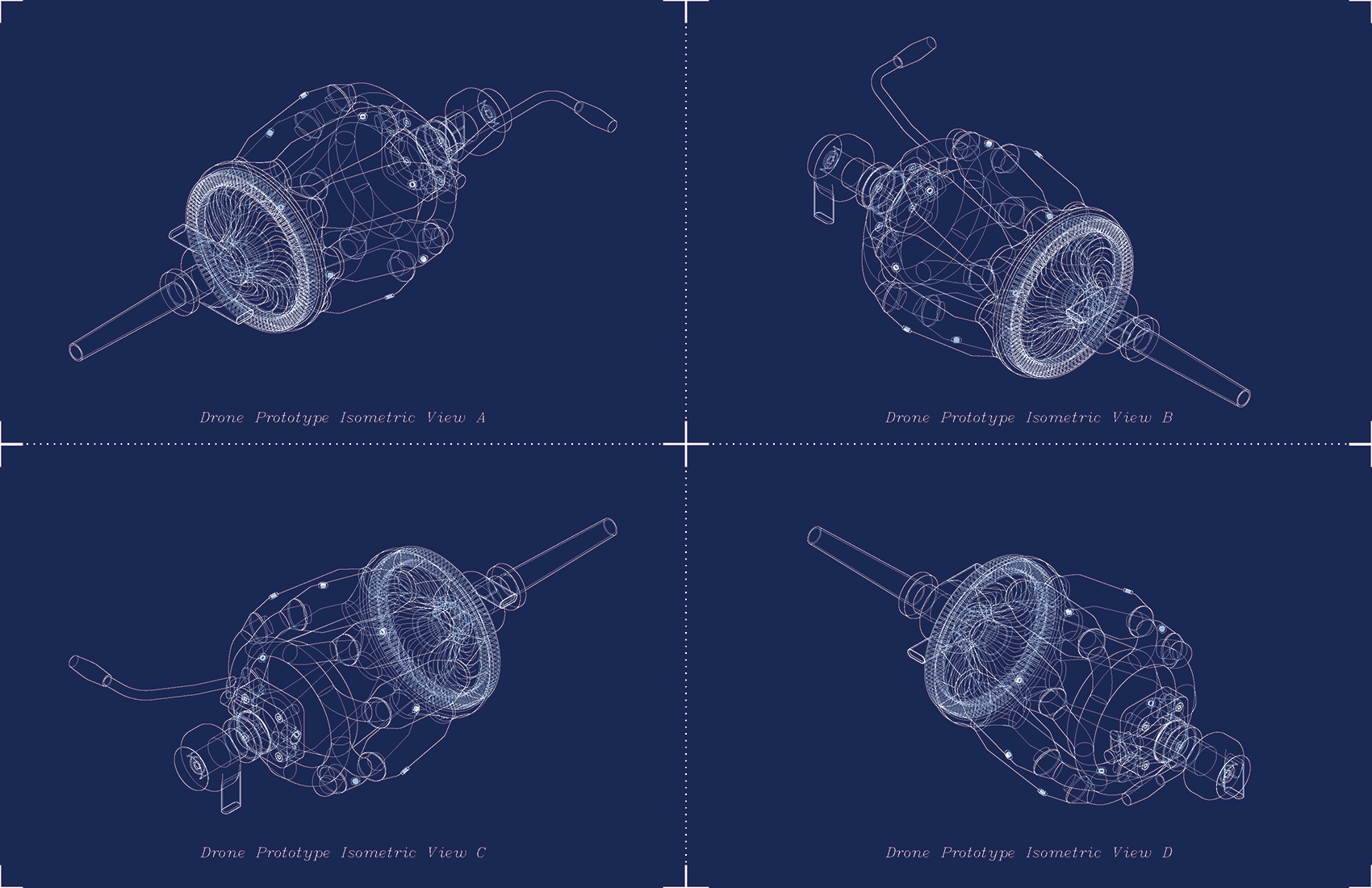
The Prototype
The drone will consist of multiple components, including a central water tank, a pressurization unit, a carbonated water reservoir, flight components, and a release module. The diagram on the right illustrates in detail how these components are assembled and integrated.
Feasibility Analysis
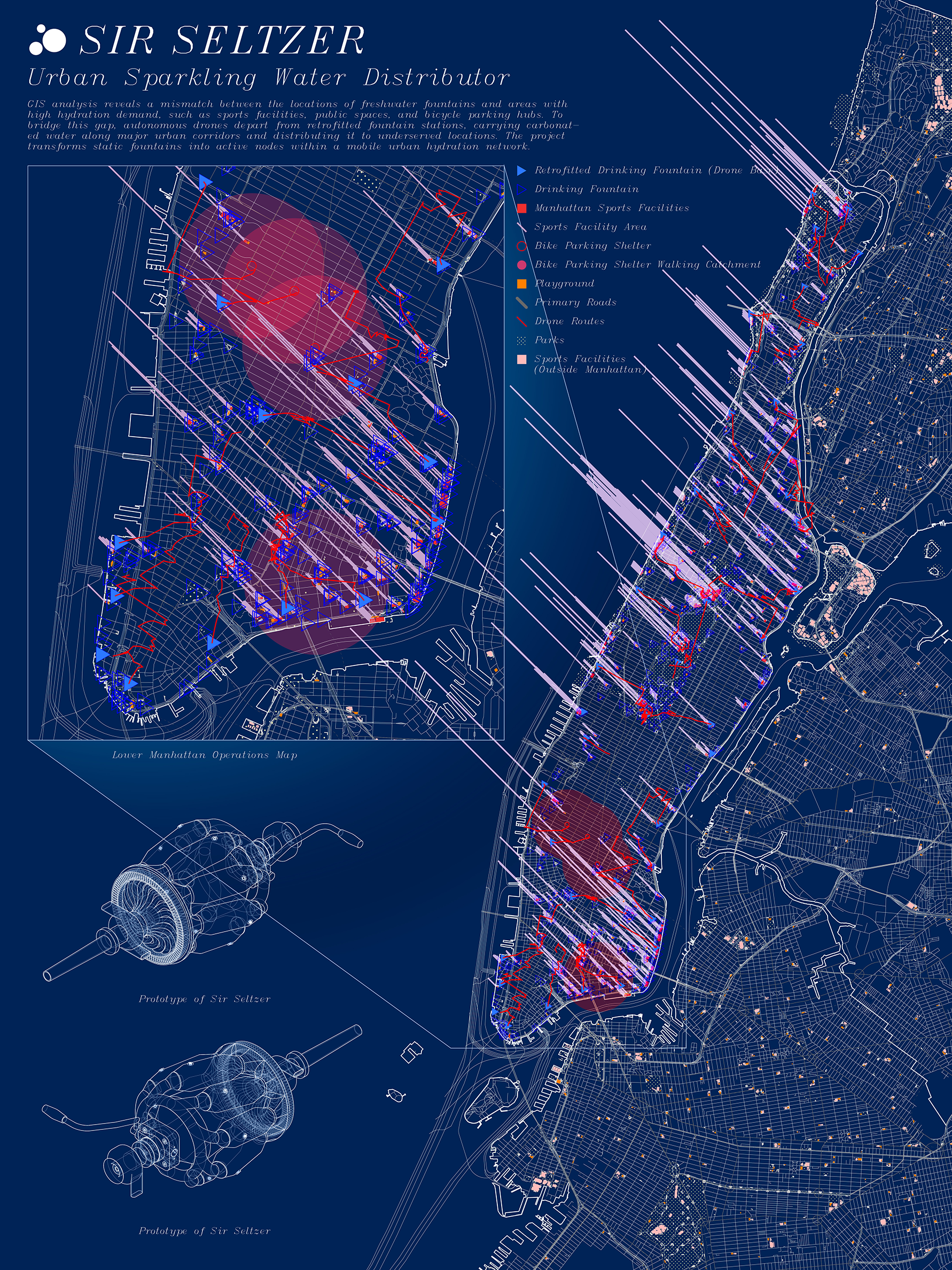
Through GIS analysis and mapping, this project uses Manhattan as a case study to examine the island’s existing drinking fountain infrastructure alongside potential delivery destinations, including sports facilities, bike parking stations, parks, playgrounds, and other public spaces.
Selected drinking fountains at strategic locations are then proposed to be retrofitted as charging and water-refilling stations for the drones. Using an algorithmic routing approach integrated with the existing street network, the analysis identifies efficient flight routes from each station to nearby destinations with the highest projected demand.
Through this process, the study explores how an efficient distribution network could be established across Manhattan and evaluates the overall feasibility of the proposed system.
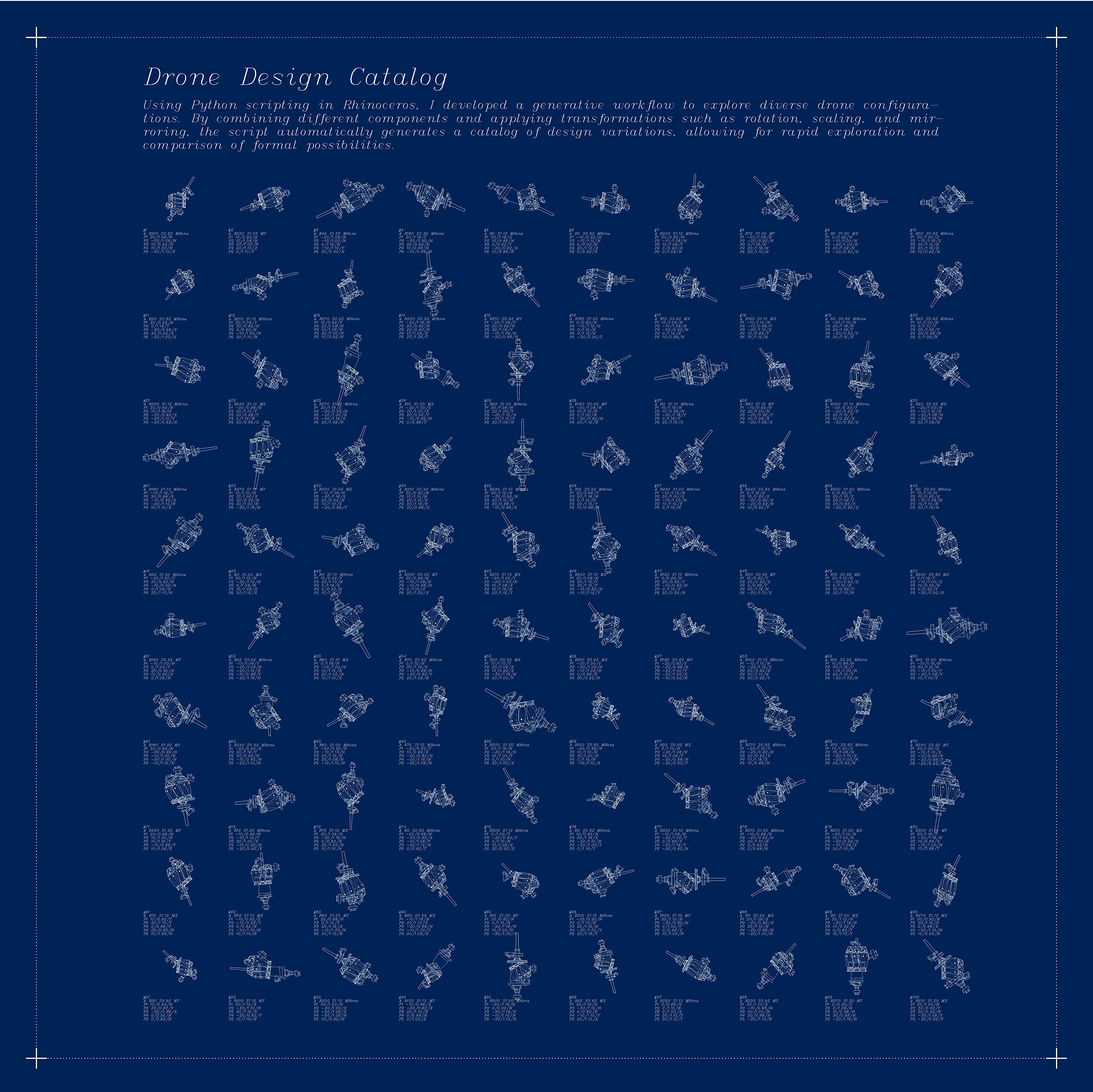
The Catalog
Finally, an algorithmic process was developed to automatically generate a wide range of possible design configurations by experimenting with the dimensions, positions, quantities, and relationships between prototype components. This approach accelerates design iteration while enabling the exploration of a broader range of possibilities.